Posts

Om Mani Padme Hum

Image
Om Mani Padme Hum  is a spiritual onomatopoeia within which hides a mystery. Whether or not there is meaning to be gotten from somewhere deep within the saying, I find it far more interesting to  practice it, to say it and feel it, and become an instrument of focus which the subliminal can utilise to manifest itself . There is in our subconscious a mass of influences and socialisation kept hidden from the Ego. This  unreflected  consciousness , as Sartre refers to it, I take to be the fount of our recursive existence. There are others who take a doxographic approach, content with listing a lexical meaning: “praise to the jewel in the lotus”, some say is the direct English meaning. And by thereby pinning it down with exactitude, its utility as a mantra of focus for the subconscious and subliminal is lost. The hidden influences shy away from the light of language. So say it, sound it out, over and over:  Om Mani Padme Hum, 唵嘛呢叭咪吽 , until the self reflects itself a...
Navigating the poles of Free Will and Determinism with Wisdom

Image
Much political life plays out between the poles of Free Will and Determinism. This is an attempt to specify with some exactitude the means by which Wisdom, as defined below, might be used to navigate the wide sendukha between those hypothetical extremes. Before embarking on the discussion proper, we require a working understanding of free will and wisdom. I would also recognise, as a matter of course, that not all determinists, and not all believers in free will, believe in the same thing. Both beliefs admits of different forms and extent.

Dostoevsky’s The Possessed - A Climax

Image
In Dostoevsky’s  The Possessed , the son of the Stavrogin serf Shatov grapples with his faith and lingering feelings of devotion to the Stavrogin Scion, Nikolay Vsyevolodovitch, atheist and philosopher (and possibly socialist).

The Relation between Doubting Faith and Gender

Image
At core, both of these doubts have to do with the interstice between the sincere thought and the politics of the day. Yes, those people of staunch faith and those who subscribe to the rigidity of gender boundaries will raise another point: objective truth. But the difficulty in the definition of such “objective truth” raises obvious problems. Any attempt to raise “objective truth”, even if raised sincerely , falls to being a political position (in the context of the raging culture war).

Three types of thinking: Scientific, Artistic & Religious

Image
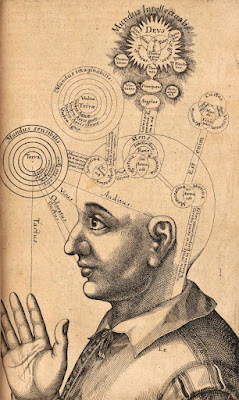
The first time I came across this question was in the course of writing my as-yet unpublished book Human Thought as Recursion . In it, I considered the role which was played by rigour in disciplining the thinking process, and as leading it down the long, meandering path of Infinite Recursion. Recently, I came across a question along the lines of "[w]hat is the difference between artistic and scientific thinking?", and my prior musings came back to me; it then occurred to me that it would be helpful to discuss some useful categories on the subject.

Living with Depression and Anxiety

Image
I recently came across a question, by no means uncommon, about experience of living, and struggling, with depression and anxiety. How can one cope? This question is important for its tendency to lead to thoughts of suicide, a topic I had commented upon previously .

Cereals in Rome: A Vignette

Image
Picture: A Modern Rendition of the Retiarus (I have not been able to find the owner/creator of the picture; if you are the owner, please email yann@yannideology.com with proof) Corn (maize, not the corn of the Mediterranean, which was wheat) is everywhere, and in this age, makes up much of us . It is as good a starting point as any, giving rise to the first question, so suggestive of a long journey - how did our relationship to agriculture arise? - a journey which leads, in the end, to our questioning the politics of food, which today is played by fitness influencers, states and scientists. But that is getting ahead of oneself, for this article is only about '[c]ereals, vines and olives' (Peter Garnsey,  Food and Society in Classical Antiquity,  pg 13, citing Braudel).

AGŌN has been released 16 May 2023!

Image
Release Date AGŌN will be available in Print (KDP print-on-demand) and E-Book form on 2 April 2023 (AGŌN has been released 16 May 2023). Remember to leave a review!  Edit: Publication date pushed back to 16 May 2023 . Edit:  AGŌN has been published! Get your Kindle copy now at  this link ! Synopsis A new and powerful technology resurrects a long-dead warrior from the distant past, triggering a deadly game of corporate politics. As shadowy schemes spiral out of control, the ensuing bedlam upends life on the crowning achievement of corporatist innovation - Iceberg City. In the thick of confusion, fundamental values bend and then break as each player jostles, lies, cheats and kills for profit. But from within the tortured life of 'utility' emerges the ancient call towards the self-determination of meaning - a call which harbours inevitable self-destruction. "Agōn" is a post-modernist dark fantasy set in a science-fiction world where untrammelled human competition...

Masculinity - Competition, Conflict, Catastrophe

Image
Modern society has over many generations feminised large proportions of men and put them into bonded servitude to the State. An epidemic of mind-poisons rages amongst the dilapidated tenements of civilisation, turning people (to a large extent men: hikikomori, incel, NEET, karyu shakai) victims of their Selves . Many mechanisms work together to create this outcome, and not all of them are coordinated by a centralised authority - thus, the 'matrix' narrative propounded by would-be Andrew Tates have to be mercilessly critiqued. But instead of being critiqued, Tate himself has been strong-armed into oblivion, a mis-step than can only serve to propound his ideology further. What critiques there exist tend to be tawdry misrepresentations of the pressing need which Tate has come to service. Much that Tate says has ancient pedigree, and is reasonably wise; much that Tate says also, is a function of a cynical politics that should be recognised as-such  (this particular critique will ...

Mevlana Jalaluddin Rumi and the Sufi Path of Annihilation: Multiplicity and Convolution

Image
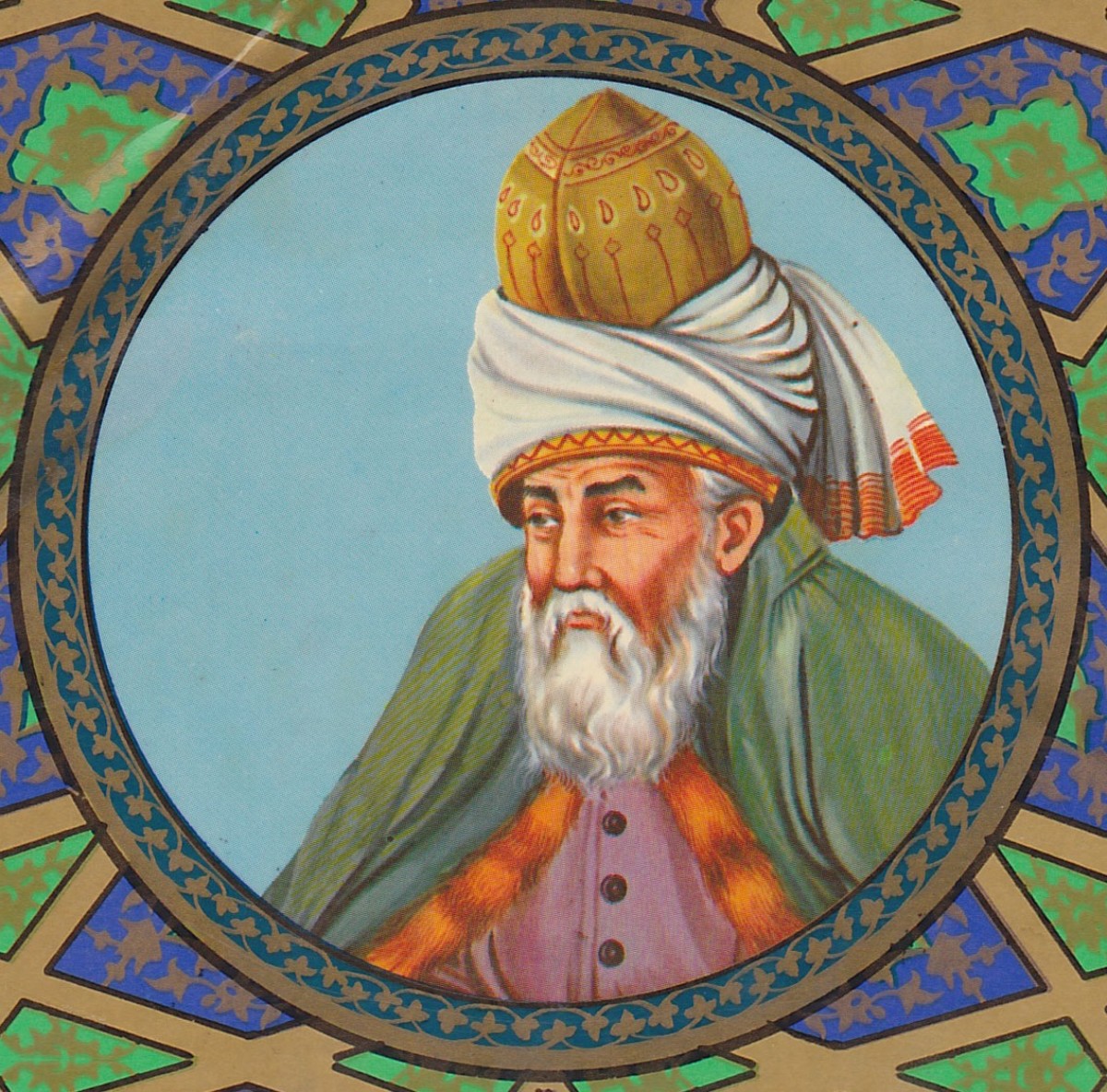
Jalāl al-Dīn Muḥammad Rūmī   was a Persian poet who lived during the 13th Century AD, whose philosophy of transcendence of the Self (a transcendence through annihilation, according to the practice of Itlaq Yolu : (i) zikr , (ii) fasting, (iii) mental suffering and (iv) discussion, (iv) being of least importance) holds some depth. Much has been said about his mysticism, but to my mind his poetic explorations of the meandering human spirit and its capacity to travel through and ultimately transcend the unlimited layers of limited perception (as Nevit O. Ergin puts it in "The Sufi Path of Annihilation") are bound to one direction: the submersion of faculty in multiplicity and convolution. A deep consideration of these ideas is certain to deepen any philosophy; a shallow consideration of these ideas is certain to delude.

How Ilhan Omar Overstepped Her Boundaries

Image
For the past few days, the name - and face of - 'Ilhan Omar' has been plastered all over the news. Apparently she has unequivocally apologised - for invoking anti-semitic tropes in controversial tweets. It is interesting to note here that much of the pressure for her to apologise came not from the Right, but from US House Democrats, including Nancy Pelosi . It seems that Speaker Pelosi is having a difficult time reining in these newer additions to House Democrats, including Alexandria Ocasio-Cortez, Rashida Tlaib (most famous for characterising Trump as a 'Motherfucker') and Ilhan Omar herself.

The Limits of Judicial Review in Singapore

Image
For some time I have been interested in the way Singaporean courts construe of the role of judges. Singapore is a common law country, that is, a country which, inter alia , applies the doctrine of binding precedent (in Latin, the doctrine of s tare decisis ), as opposed to civil law countries (say, of the Franco-German variety) which do not follow the same doctrine. Of course, it is another argument altogether as to whether precedent in civil law countries are in fact accorded de facto authority.

Who Was Emer Vattel (1714-1767)?

Image
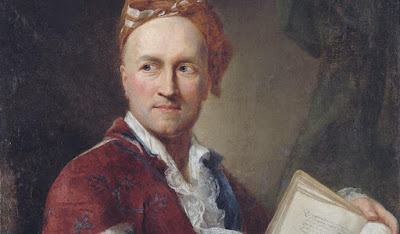
The American moralist may know Emer Vattel as the source of that storied line in the United States Declaration of Independence: "We hold these truths to be self-evident, that all men are created equal, that they are endowed by their Creator with certain unalienable Rights, that among these are Life, Liberty and the pursuit of Happiness .” Vattel's influence came primarily from his magnum opus , The Law of Nations . Who was he, and what was it about his ideas that inspired a global philosophical crusade which took as its object the search for the meaning of life ? What does  Vattelian happiness , and what about that conception is applicable in the modern world?

What Are Blockchain and Distributed Ledger Technology ("DLT")?

Image
We've all heard of the blockchain technology allegedly 'disrupting' all kinds of industries.  Blockchain had promised to introduce a key 'digital' element in disparate fields, from finance to tech, and even to that conservative beast called 'the Law' - but so far such promises have not borne fruit. The question is, what is blockchain? Essentially, it can be considered as a form of Distributed Ledger Technology ("DLT").

Setting up Domain Without the 'www'

Image
Steps: 1. Setup CNAME www to provided DNS target by hosting org (for example, google. Check with the hosting org what to include in the 'points to' section). 2. ping www.[yourdomain].com and copy the IP. (Check this article to find out how to do this) 3. Add A record with @ point to IP copied from step 2.

How to Ping Websites in Windows

Image
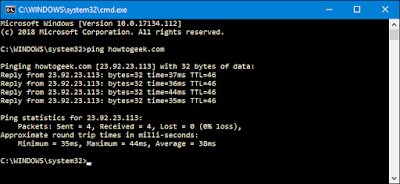
Pinging is a useful tool to find out the IP address of targeted websites. Do note, however, that website IP addresses may be hidden in a variety of ways.

6 Things We Can Learn from William the Conqueror

Image
William I, William the Conqueror, William the Bastard, first Norman King of England, lived from AD 1028 to 1087. He reigned as King from 1066 until his death, and brought the Common Law to what is now Britain. Here was the illegitimate son of Robert I, Duke of Normandy. Here was a man who ascended to the height of power by a combination of charisma, intrigue and strategy. For he who was stricken by the uncertainty of illegitimacy, his greatness was vindicated by his crowning as King at Westminster Abbey on Christmas Day 1066. Here is what we can learn from him.

From Amos Tversky's Scrap of Paper

Image
Amos Tversky was not known as a hoarder. He was the very opposite. He threw away things that didn't matter, and many things which might have. He eschewed social norms. But of his past he did keep a single scrap of paper. On it was written:

There’s Criticism, and Then There’s Bullshit Criticism

Image
Good Criticism – no bullshit euphemisms Here’s a wild thought – if you thought through how to deal with criticisms, you might handle it better. Modern social organisations are so complex and crowded that anyone must give and take criticism – good or ill intentions notwithstanding – on a daily basis. There are different types of criticisms and different kinds of people which give criticism. The latter affects the former, though it is not always determinative. But one has limited capacity to take criticism – there is a cognitive cost to feeling inadequate, and one must be aware of the danger of becoming deaf to all criticism.

Market Analyses - Bloomberg's Compilation

Image
Bloomberg has provided a helpful compilation of projections for 2019. America's unstable Presidency and/or divided government has already caused global financial turmoil (most notably in China), and it is clear that a period of discomfort may be in the works.